“Come with me…and you’ll see…a woooorld of human degradation…”

Hey, I’ll be honest, I’m sitting at the bottom of a barrel and looking up some awfully steep walls.  Writing my way out of it this week seems impossible.  Instead, I’d like to enlighten any of you who aren’t aware exactly *what* I’m so mad about all the damned time.  I read this article this morning:  https://www.just-food.com/news/nestle-accused-of-double-standards-over-sugar-in-baby-formula-cereals/

And realized I’m particularly sick of a literal evil empire we all universally condone with inaction.  

So, this is the Nestle Corporation, writ large:

  1. Infant formula scandal:

In the 1970s, Nestlé began aggressively marketing its infant formula in developing countries, particularly in Africa, Asia, and Latin America. They discouraged breastfeeding and encouraged mothers to switch to formula feeding, even in areas with limited access to clean water and adequate sanitation.

Nestlé was caught giving free samples of infant formula to hospitals and maternity wards…but only so much as to last long enough for the mother’s milk to dry up, as it’s definitely a “use it or lose it” skill.  The company also hired “milk nurses” to visit homes and promote formula feeding, dressed in uniforms resembling those of health care professionals.  

Those unsanitary conditions I mentioned?  Yeah, they led to widespread malnutrition, diarrhea, and infant deaths.  Nestlé prioritized profits over the health and well-being of infants in developing nations.

In 1974, the British charity War on Want published a booklet titled “The Baby Killer,” targeting Nestle’s abuses of the Global South. The report was translated into German with the (much punchier) title “Nestlé Kills Babies.”  Nestle sued for libel and *SOMEHOW* Nestlé won the lawsuit EVEN THOUGH the court ruled that the majority of the allegations against the company were true.  This is akin to if Nuremberg had ended on a technicality.  “You guys sure were Nazis, but you also helped several old ladies across the street in ‘36…so…obviously you’re not *all* bad.”

The controversy led to a widespread boycott of Nestlé products (obviously), which began in the United States in 1977 and spread to other countries.  In response to the growing pressure, Nestlé agreed to abide by the WHO’s International Code of Marketing of Breast-milk Substitutes in 1981. However, the company has been repeatedly criticized for violating the code and continuing to promote infant formula in ways that undermine breastfeeding.

This entirely disregards the recent news that Nestle has been spiking their infant formula in the developing world with sugar.  I’m sure Nestle has a totally reasonable excuse that several legislators will parrot–and I’m sure it has nothing to do with anonymous or dark moneyed donations.  

  1. Child labor and slavery:

Nestlé has been wantonly abusing child labor and literal slavery in its cocoa supply chain, particularly in West African countries like Ghana and Côte d’Ivoire, which together produce about 60% of the world’s cocoa.  Doesn’t that mediocre chocolate bar in your hand seem a fair trade for the literal lives of children?  

In 2001, the US Congress passed the Harkin-Engel Protocol, a voluntary agreement signed by major chocolate companies, including Nestlé, to eradicate child labor in their supply chains. In addition to creating the “Dolphin Safe Sticker” equivalent for child slavery, the protocol laid out a non-binding agreement for the cocoa industry to regulate itself without any legal implications.  This agreement was one of the first times an American industry was subjected to self-regulation and one of the first times self-regulation was used to address an international human rights issue.  How do you think it went?

In 2005, the International Labor Rights Fund (ILRF) filed a lawsuit against Nestlé and two other chocolate companies in US federal court on behalf of three Malian children who were allegedly trafficked to Côte d’Ivoire and forced to work on cocoa plantations. The suit claimed that the companies aided and abetted human rights violations through their purchase of cocoa from plantations that used child labor. In September 2010, the US District Court for the Central District of California determined corporations cannot be held liable for violations of international law and dismissed the suit.  The case was dismissed by the court in 2016 due to jurisdictional issues.  I’d like you, a *REAL* person to violate international law and tell me if the court finds itself incapable of punishing you.  

In 2011, a BBC investigation found evidence of child labor and trafficking in Nestlé’s supply chain in Ghana and Côte d’Ivoire. The report featured interviews with former child workers who described long working hours, dangerous conditions, and physical abuse.  Almost like letting chocolate producers self-govern with profit as the sole motivator (Fuck you, Jack Welch of GE) isn’t going to move any needle.  

In 2015 (14 years later), the Fair Labor Association (FLA) conducted an assessment of Nestlé’s cocoa supply chain in Côte d’Ivoire and found multiple instances of child labor. The report noted that while Nestlé’s steps to address the issue were minimal, primarily related to “providing education and training programs.”   The root causes of child labor, including poverty and limited access to education, remained significant challenges that Nestle continues to exacerbate and extend via their chocolate reign of terror.  Psssst–the CEO made 11.246 Million, this year, most of it by artificially adjusting their stock prices through deceptive and evil labor and sales practices.

In 2019, a study by the University of Chicago found that over 1.5 million children were engaged in child labor in cocoa-growing areas of Ghana and Côte d’Ivoire, with many exposed to hazardous conditions such as using sharp tools, carrying heavy loads, and applying pesticides.

In 2021, Nestlé was named in a landmark class-action lawsuit filed in US federal court by eight former child slaves from Mali who alleged that they were forced to work on cocoa plantations in Côte d’Ivoire that supplied the company. The lawsuit accused Nestlé and other chocolate companies of knowingly profiting from the illegal use of child labor.  Which million-dollar legal loophole will this hydra-headed monster escape through, this time?  

Nestlé has “acknowledged the issue of child labor in its supply chain” and has committed to working towards its elimination. The company has implemented various initiatives, such as the Nestlé Cocoa Plan, which aims to improve the livelihoods of cocoa farmers and their communities, and the Child Labor Monitoring and Remediation System (CLMRS), which seeks to identify and address cases of child labor.  All of these are internally-managed systems, which we’re aware do not work, with over 20 years of empirical data. None of them manage to address the issue that when Nestle “acknowledges the issue,” the issue they are acknowledging is not child labor itself–merely that you’re hearing about it.

  1. Deforestation:

Nestlé has been implicated in deforestation activities related to the production of commodities such as palm oil, cocoa, and pulp and paper in various regions, including Southeast Asia, West Africa, and South America.  They *promise* they feel really, really bad about it.  Would a Japanese Kit-Kat help?  I bet it would.  Have a break from the wilful degradation of the human condition by an evil chocolate producer…I mean, “with Kit-Kat.”  

Palm oil:

Nestlé is a major purchaser of palm oil, which is used in a wide range of its products, from snacks to personal care items. The expansion of palm oil plantations has been a significant driver of deforestation, particularly in Indonesia and Malaysia, which together produce around 85% of the world’s palm oil.

In 2010, Greenpeace launched a campaign targeting Nestlé’s use of palm oil sourced from suppliers linked to deforestation in Indonesia. The environmental group released a report titled “Caught Red-Handed: How Nestlé’s Use of Palm Oil is Having a Devastating Impact on Rainforest, the Climate and Orang-utans,” which accused the company of sourcing palm oil from plantations that were destroying rainforests and peatlands, and contributing to greenhouse gas emissions.

Also–and with a great deal more impact–they created a viral video satirizing Nestlé’s Kit Kat commercials.  You may have seen it.  An office worker bites into his mediocre chocolate wafer bar and instead finds he’s munching on a bloody orangutan. The video was viewed over a million times and sparked widespread outrage on social media.

In response to the pressure, Nestlé announced a “zero deforestation” policy in 2010, committing to ensuring that its products do not contribute to deforestation.

Cocoa:

Nestlé has also been linked to deforestation in West Africa, particularly in Ghana and Côte d’Ivoire, which are the world’s largest cocoa producers. The cocoa plantations have cleared vast areas of forest, including protected areas and national parks.  You’d think this much suffering would produce a better product.  

A 2017 investigation by Mighty Earth, a global environmental campaign organization, found that Nestlé and other chocolate companies were sourcing cocoa from protected areas in Côte d’Ivoire, including the Taï National Park, a UNESCO World Heritage site. The report, titled “Chocolate’s Dark Secret,” revealed that around 40% of the cocoa produced in Côte d’Ivoire came from illegally deforested areas.

In response to these findings, Nestlé has “committed to achieving zero deforestation in its cocoa supply chain by 2025.”

Pulp and paper:

Nestlé has been criticized for its use of pulp and paper products sourced from companies linked to deforestation in Southeast Asia and South America. In 2011, Greenpeace accused Nestlé of sourcing pulp and paper from Asia Pulp & Paper (APP), an Indonesian company that was allegedly involved in the destruction of rainforests and peatlands in Sumatra.

In response to these allegations, Nestlé announced that “it would stop purchasing pulp and paper from APP and implement stricter sourcing guidelines for its suppliers.”

You probably picked up on a trend, even just this far in.  1) Company is wantonly evil; 2) someone notices; 3) the “government” slaps company on the wrist; 4) company performs nominal lip service to “being better” while it continues to get worse.  

JUST MAKE THEM BE GOOD OR SHUT THEM DOWN.  WHY IS IT SO HARD?

And, in case you were wondering, as of 2020, 30% of Nestlé’s palm oil is STILL not free from deforestation

  1. Water privatization:

Let me open with this quote from former CEO (1997-2008) and current chairman emeritus had to say on the subject of drinking water:  

“Water is, of course, the most important raw material we have today in the world. It’s a question of whether we should privatize the normal water supply for the population. And there are two different opinions on the matter. The one opinion, which I think is extreme, is represented by the NGOs, who bang on about declaring water a public right. That means that as a human being you should have a right to water. That’s an extreme solution. The other view says that water is a foodstuff like any other, and like any other foodstuff it should have a market value. Personally, I believe it’s better to give a foodstuff a value so that we’re all aware it has its price, and then that one should take specific measures for the part of the population that has no access to this water, and there are many different possibilities there.”

Just wanted to be clear that *THE LARGEST BOTTLED WATER PRODUCER* would really prefer you not think about how water was, more or less, free before they started putting it in single-use plastics and exporting it to their first-world friends.  

In the United States, Nestlé has faced criticism and legal challenges over its water extraction practices. In California, the company has been accused of continuing to pump water during droughts, despite restrictions and public outcry. In 2017, Nestlé’s permit to extract water from the San Bernardino National Forest was challenged by environmental groups, who argued that the company was taking more water than allowed and harming local ecosystems.  The fact that the West Coast spends most of the warm-season on fire implies that this is, in fact, the case.  

In Michigan, Nestlé has been involved in a long-running dispute over its pumping of groundwater for its Ice Mountain brand. In 2000, the company faced protests and a lawsuit over its plans to extract water from a spring in Mecosta County. Critics argued that Nestlé’s pumping would deplete local aquifers and harm wetlands and streams. The case was eventually settled, with Nestlé agreeing to reduce its pumping and monitor environmental impacts.  Their track record would suggest this is horse shit of a really high degree.  

However, the most controversial aspect of Nestlé’s water operations has been its involvement in water privatization in developing countries. The company has been actively promoting the privatization of water services and using their unbelievable monopolistic power to lobby governments into giving control over public water resources to a company that doesn’t feel human beings need water–not really.

In Pakistan, Nestlé has been criticized for its partnership with the Pure Life brand, which has been accused of exploiting local water resources and selling bottled water at prices that are unaffordable for many residents. In 2018, a report by the Sri Lankan government found that a Nestlé factory in the country had been depleting and contaminating local water supplies, leading to protests and calls for the factory to be shut down.

In Brazil, Nestlé has been involved in a controversial project to extract water from the Guarani Aquifer, one of the world’s largest underground water reserves. The company has partnered with a Brazilian water company to build a pipeline that would transport water from the aquifer to a Nestlé bottling plant. Critics have argued that the project could deplete the aquifer and harm local communities that depend on it for their water supply.

Defenders of water privatization argue that private companies can improve efficiency, reduce waste, and increase investment in water infrastructure. Defenders of water privatization also all share one brain cell, and I heard it got lost in the mail between users at some point in the early ‘90s.  

  1. Pollution:

Nestlé is a major polluter and prone to lying about the worst results of that pollution.  This includes the discharge of industrial wastewater and the generation of unrecyclable plastic waste.  And before you jump down my throat about it:  everyone who was involved in “plastic recycling” has known it to be a scientific impossibility *THE ENTIRE TIME.*  What you thought was saving the environment was more than likely just resupplying materials to the companies that are killing you with them.  Congrats!

One notable case of Nestlé’s moral bankruptcy is a coffee processing plant in Dong Nai province, Vietnam. In the ‘90s, the factory discharged untreated wastewater into a nearby river, causing unnecessary, avoidable pollution and irreparably harming local communities. In 2011, the company was fined by Vietnamese authorities for failing to properly treat its wastewater and comply with environmental regulations.  Considering their CEO is personally funded better than most of the EU, I can’t imagine a fine from the country of Vietnam was anything more than a rounding error on a balance sheet.

In the Philippines, Nestlé’s coffee processing plant in Cagayan de Oro City was also accused of polluting a nearby river with industrial effluents. In 1999, the company faced protests and legal complaints from local residents who claimed that the factory’s wastewater had contaminated their water supply and caused health problems.  They claimed it, by the way, because it had.  

In India, Nestlé has faced criticism over the environmental impact of its instant noodle brand, Maggi. In 2015, tests by Indian authorities found that some Maggi noodle samples contained excessive levels of lead and MSG, leading to a nationwide ban on the product. The company did not properly disclose the presence of these substances on its packaging.  

More broadly, Nestlé has been criticized for its contribution to the global plastic waste crisis. As one of the world’s largest food and beverage companies, Nestlé produces a significant amount of single-use plastic packaging, much of which ends up in landfills, oceans, and other natural environments. In 2018, a Greenpeace report named Nestlé as one of the top corporate contributors to plastic pollution in the Philippines, based on waste audits conducted in the country.  And, as I said, *THEY’VE KNOWN IT ISN’T REALLY RECYCLABLE THE WHOLE TIME.*

  1. Labor rights violations:

Nestlé violates labor rights for fun, often pushing closely into the “violating the laws of gods and man” territory of disregard for their fellow creatures.  

In 2007, Nestlé faced a lawsuit in Colombia alleging that the company had collaborated with paramilitary groups to intimidate and kill union leaders at its factories. The lawsuit was filed by the estate of Luciano Romero, a union leader who was murdered by paramilitaries in 2005. Nestlé denied the allegations and argued that it had no control over the actions of paramilitaries, but the case highlighted the risks faced by labor activists in Colombia and the potential complicity of multinational corporations.  I want to point out:  Nestle did not deny the association with the paramilitary organization–as a matter of fact they’re pretty open about using PMCs to create de facto military juntas in the name of Nestle all over the Global South.  They merely denied that they ordered anyone killed, directly.  “Oh, it sure would be nice if that union leader didn’t exist.”  I’m sure that was never said in front of *any* insane, armed, privately-owned commandos.  Never.  

In Thailand, Nestlé has been criticized for its treatment of migrant workers in its seafood supply chain. In 2015, a report by the NGO Verité found that many migrant workers in the Thai fishing industry, which supplies fish and seafood to Nestlé and other companies, were subject to forced labor, human trafficking, and other abuses. Nestlé has pretended to do something, but I quietly suspect they’re probably ramping up to tinning the migrant workers because it would be cheaper than fish.  

In Turkey, Nestlé has been involved in a long-running dispute with trade unions over working conditions and collective bargaining rights. In 2012, the company was accused of union-busting and intimidation tactics against workers who were trying to organize at its factories. The International Union of Food Workers (IUF) launched a global campaign against Nestlé, accusing the company of violating international labor standards and failing to respect workers’ rights.  Son-of-a-bitch!  If *TURKEY* has issues with your approach to human rights….what are you even doing?

Nestlé has also faced criticism over its use of temporary and contract workers, who often have lower wages and fewer benefits than permanent employees. In Russia, for example, a 2016 report by the NGO China Labor Watch found that many workers at Nestlé factories were employed through subcontractors and agencies, with some earning less than the legal minimum wage.

Alright, I’m frothing at the mouth and starting to twitch.  You’re going to read this (Ha, no one is reading this) and then go out today and buy a Nestle product because there’s nothing you can do about it.  

To quote my favorite Walton Goggins character:

“Everything about your little world was decided over 200 years ago.”

It definitely feels that way, most of the time, doesn’t it?  

From hell, 

The Strangest
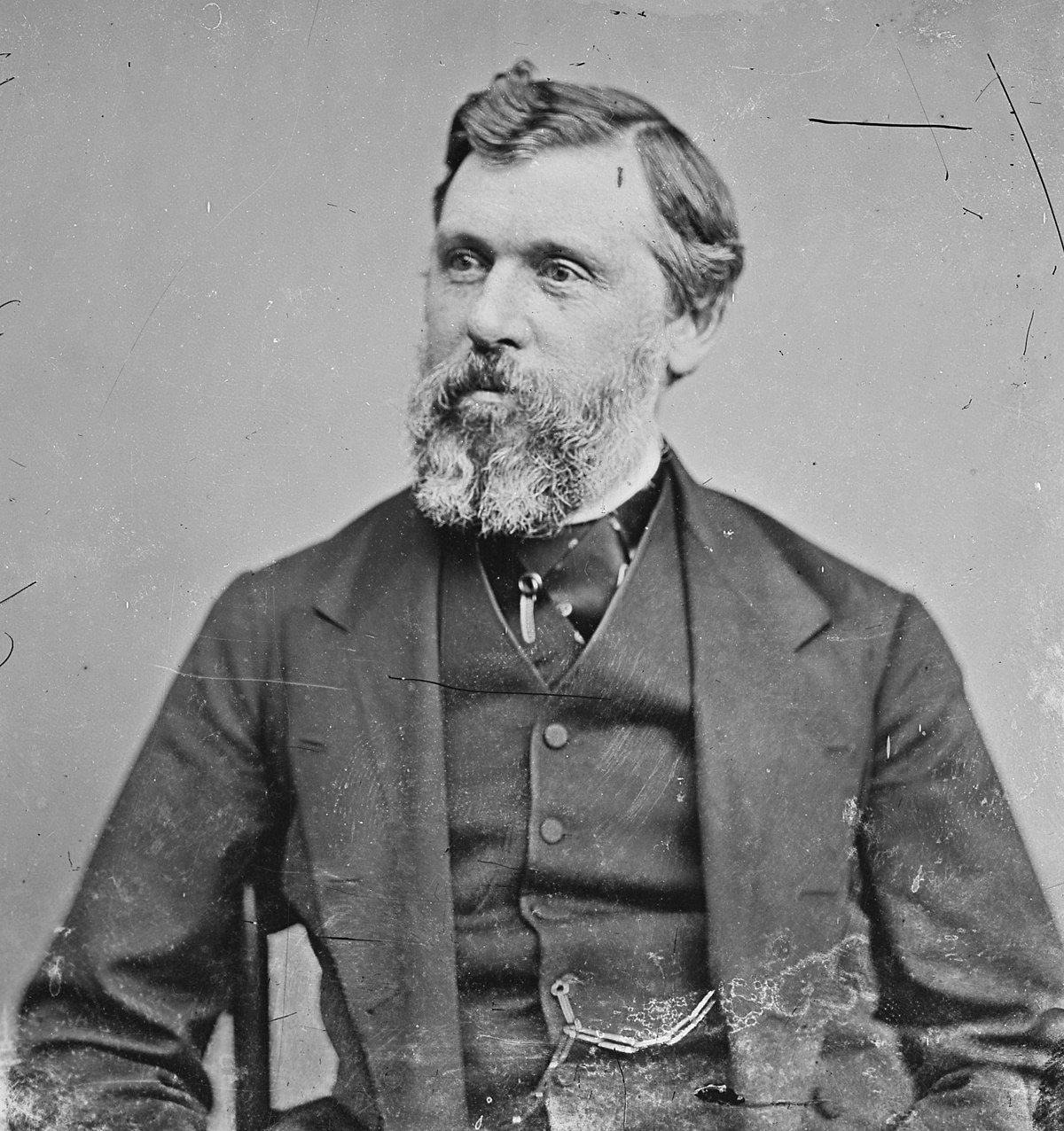
Bring me the head of J.C. Bancroft Davis!

PART TWO

Somebody stop the presses (they’re printing bullshit, anyways).

Your whole life sucks for no reason!

There’s literally, actually no basis of law that led to the fundamentally broken world you’re forced to birth your young into.  As a matter of fact, your entire existence was fucked royally sideways primarily by this man: 

That’s J.C. Bancroft Davis, but I like to call him, “you stupid fucking bastard.”

SFB, when I’m feeling cute. 

SFB here did quite a number on the future and–unconscionably–he did it on behalf of a railroad company I’m not entirely sure even exists anymore.  Good thing he wasn’t forty years later and working for GM.  As usual, I digress.

By now, I’m sure you’re shouting at the screen:  “WHAT DID HE DO?!?!”

(Just kidding; no one is reading this blog)

This SFB here created the entire American concept of corporate personhood, by himself, without consulting anyone else.  This man was not president or emperor or even ON THE SUPREME COURT.  This man–who completed his legal education only after having been once suspended, and likely only on the back of his auspicious lineage–completely altered the course of human history in his job as THE REPORTER FOR THE SUPREME COURT.  

Alright…I’m overselling it a little bit and I’ll calm down.  I’ll take a step back so we can dig into who we’re talking about here.  This fella’ has quite a pedigree.  Among the “Davis” family, this absolute mistake of nature was birthed into a dynasty with roots incestuously deep into the Whig Party, then the Federalist Party, and then the eventual Republican Party. Harvard and Yale educations have been frequent among them, and most had gone further on to law school. Some were in clubs at these schools such as the Fox Club at Harvard and one of the founding members of the Skull and Dagger secret society at Yale and Harvard shares this abjectly poisoned DNA.  Moreover, they’re directly connected by blood and by marriage to the Lodge clan, made famous by imperialist Son-of-a-Bitch, Henry Cabot Lodge.  There’s still one alive, to our collective chagrin, a George C. Lodge, who would still be inflicting this hereditary privilege upon us had he not lost a congressional election to the scion of another corrupt political dynasty, Edward Kennedy.  

So, with those congenital connections, it isn’t hard to see how this relatively inconsequential descendant of someone important would’ve floundered upwards into the corrupt administration of Ulysses S. Grant.  Grant’s administration, by the way, was so famously corrupt that it led to the rise of under secretaries in each federal department as his cronies and relatives punted and punted their jobs until someone subordinate had to be hired to do it for none of the glory.  From there, it was a quick wiggle-jaunt to get SFB into a role that would come to defy every indication that he was just another unexceptional nepo-baby and actually (arguably) the antichrist.  

In his role as Reporter for the Supreme Court, it was his unique responsibility to summarize the arguments and discussion held between justices while the court was in session.  You may wonder why this was an appointed position, and you’d be right to do so.  In the landmark case of Santa Clara County v. Southern Pacific Railroad Company (1886), the Waite court said that corporations were people.  

Except they didn’t.  Read the decision.  Not one word intentionally communicated by a justice of this nation directly invokes this notion. It only appears in the LEGALLY NON-BINDING headnote added (very conveniently) by our friend SFB.  That headnote says:

“The court does not wish to hear argument on the question whether the provision in the Fourteenth Amendment to the Constitution, which forbids a State to deny to any person within its jurisdiction the equal protection of the laws, applies to these corporations. We are all of the opinion that it does.”

That’s the editorial we, of course, because there’s never been any evidence to suggest this was anything more than a biased interpretation of pre-trial chatter.  Moreover, SFB had good reason to want the Waite court to resign themselves to this legal fiction:  Davis’s prior position as president of Newburgh and New York Railway probably made him conflicted to the point that his only interest would be selfish.  

And somehow our entire conception of the role of corporations in society was borne of a morally compromised idiot editorializing.  Mad yet?

How about if I told you that Justice Stephen Fields, whose railroad connections were manifest, plentiful, and profitable (and likely the justice whose fractiousness led to whatever discussion caused the smoking gun headnote)?  What if I told you he later flew flagrantly in the face of the rule of law and cited a headnote, which somehow had the bootstrapping effect of canonizing non-canon thought.  Angry now?

Okay, what if I told you that headnote and its subsequent corrupt invocation by Fields was the *ONLY LEGAL BASIS* for the standard of corporate personhood which allowed the Citizens United (2010) case to unrestrict and anonymize campaign donations from businesses?  The entire pitiful state of our ability to live fulfilling lives unbeholden to unexceptional white men and their fathers was sold wholeheartedly to things which pretend to be people and are implicitly not.  Imagine if it was an alien instead of your insurance provider.  Invasion of the Body Snatchers, anyone?

In case you didn’t know, here’s the 14th Amendment, emphasis mine:

AMENDMENT XIV

Section 1. All persons born or naturalized in the United States, and subject to the jurisdiction thereof, are citizens of the United States and of the State wherein they reside. No State shall make or enforce any law which shall abridge the privileges or immunities of citizens of the United States; nor shall any State deprive any person of life, liberty, or property, without due process of law; nor deny to any person within its jurisdiction the equal protection of the laws.

Section 2. Representatives shall be apportioned among the several States according to their respective numbers, counting the whole number of persons in each State, excluding Indians not taxed. But when the right to vote at any election for the choice of electors for President and Vice-President of the United States, Representatives in Congress, the Executive and Judicial officers of a State, or the members of the Legislature thereof, is denied to any of the male inhabitants of such State, being twenty-one years of age, and citizens of the United States, or in any way abridged, except for participation in rebellion, or other crime, the basis of representation therein shall be reduced in the proportion which the number of such male citizens shall bear to the whole number of male citizens twenty-one years of age in such State.

Section 3. No person shall be a Senator or Representative in Congress, or elector of President and Vice-President, or hold any office, civil or military, under the United States, or under any State, who, having previously taken an oath, as a member of Congress, or as an officer of the United States, or as a member of any State legislature, or as an executive or judicial officer of any State, to support the Constitution of the United States, shall have engaged in insurrection or rebellion against the same, or given aid or comfort to the enemies thereof. But Congress may by a vote of two-thirds of each House, remove such disability.

Section 4. The validity of the public debt of the United States, authorized by law, including debts incurred for payment of pensions and bounties for services in suppressing insurrection or rebellion, shall not be questioned. But neither the United States nor any State shall assume or pay any debt or obligation incurred in aid of insurrection or rebellion against the United States, or any claim for the loss or emancipation of any slave; but all such debts, obligations and claims shall be held illegal and void.

Section 5. The Congress shall have power to enforce, by appropriate legislation, the provisions of this article.

I’m sure those of you paying attention to the decline of Western Civilization have some familiarity with Section 2 and may even know that this was one of the Reconstruction Amendments designed to facilitate the rebirth of a nation following the Civil War.  What you may not know it does, however, occurs in the first five words.  

“All persons born or naturalized…”

In terms of legal analysis, this means the 14th amendment tells you what a person is.  At least legally.  The text of the amendment makes it clear that it is throwing the widest blanket possible across the broad spectrum of humanity.  The only two ways a person may begin to exist must then be considered in the drafting of the verbiage.  To be a person, and therefore relevant to this discussion, one must be capable of being born or naturalized.  Neither are even remotely possible for a corporation, and don’t hand me any metaphors about your “proud startup baby.”  Drown it in the bath and get back to me.  Section 1 of the 14th Amendment, if anything, should be held up as the primary example of the continued influence of enlightenment humanism on the thinkers, even some 100 years past the nation’s founding.  They believed that nothing was superior to that sentient spark some call the human soul.  That which diminishes it for the sake of order is antithetical to the rhetoric which birthed this nation and antithetical to life itself.  A railroad corporation that couldn’t even effectively manage its own finances, built its tracks with an abundance of “non-slave” slave labor, and apparently only had a talent for graft, stole your life out from under you decades before you, yourself, were born or naturalized.  

To further underscore the insanity of corporate personhood, let’s have another brief digression to establish a fundamental fact about the rule of law.  The basis for law and order is a transactional affair.  The completion of responsibilities results in the awarding of rights.  This arrangement can be implied, as in the voluntary act of NOT killing people allows you the personal freedom of not being incarcerated, or it can be explicit, like requiring registration for the draft.  In short, to be treated like a citizen (or else a person) one must act like a citizen.  Call me Kant, but you have an implicit duty not to be an asshole. Ask: If everyone did the thing you’re doing right now, would the Earth continue to spin on its axis?  No?  THEN STOP IT. 

Now, onto the thought experiment:

A big company discharges heated runoff into the river immediately behind its headquarters as an externalized cost of production.  This actually happens.  It’s why so many waterways in industrial zones have unseasonal algal blooms and fish kills.  The state of Iowa just killed all the fish in a 60 mile radius through similar offloading of externalities, for a pressing example.  The hypothetical part is this:  what if a child is swimming, absent-mindedly, and it scalded to death by the heat.  Terrible tragedy.  Awful accident.  Also 100% preventable.  In Criminal law that’s (paraphrasing) the basis for “Criminal Negligence” if not advancing to the level of “Recklessness.”  Criminal Negligence resulting in death is commonly referred to, by the way, as manslaughter.  

So we charge that company (the person) with manslaughter, correct?  

I bet that idea replaced manslaughter with man’s laughter in your head, because it’s preposterous.  How would we incarcerate it?  Which rights would we revoke for such a gross dereliction of personal responsibility?  An entity which is not a person under every aspect of the rule of law cannot be a person under any.  Mic drop.  

“So why do we uphold this?”

That’s the kind of question someone only asks if they wander in halfway through a movie.  We uphold it because the people empowered by it are also the ones impacting all the decision making.  Those undisclosed campaign donations, empowered solely by this impressive legal fiction, have installed a confused group of puppetted politicians who can do no work because they’re being pulled, as if by scared horses attached to their limbs, in countless, incongruous directions by entities which are in no way separate as a person from the soulless parasites who run them.  The era of the golden parachute is set to be replaced by the era of a legal albatross around everyone’s neck.  

The end result of this lunacy?  A spray tanned demagogue thinks the president is absolved of the legal ramifications of his morally (and financially) bankrupt decision making because, “that’s how Daddy’s company worked.”

And it’s all J.C. Bancroft Davis’ fault.  Stupid fucking bastard.  

The idea that a multinational corporation–with its boundless and immorally extracted resources, uncapped political influence, and single-minded pursuit of intangible and impossible infinite profit growth–should be treated as the legal equivalent of an individual citizen is a staggering, flummoxing, and wholly insane distortion of the principles of democracy and equality under the law.

This legal fiction is not an accident or a neutral feature of our system – it is a deliberate construct designed to benefit the wealthy and powerful at the expense of ordinary people, the world we live in, and the general appreciation for human decency as our paramount mission. By granting corporations the same rights and protections as individuals, while completely shielding the morally bankrupt who lead them from many of the responsibilities and constraints that *real* individuals face, our legal system has created a profoundly uneven playing field that tilts ever more steeply toward the interests of capital over labor.  Capital, by the way, equates to absolutely zero in a system where a fiat currency is backed exclusively by a cascading series of privately controlled debts.  

The result is a society in which the voices and needs of ordinary people are increasingly drowned out by the outsized influence of corporate power. From the corrupting influence of money in politics to the erosion of worker protections and the concentration of wealth in fewer and fewer hands, the dominance of corporate interests has led to a hollowing out of the middle class and a sense of powerlessness and disenfranchisement among large swaths of the population.  And *SOMEHOW* people stand in line and risk (justified) outrage as they hand away their life to THE badly-groomed, poorly-raised, impossibly coiffured scion of this horrific and impossible system.  

However, our baleful ex-president is not indicative of a new phenomenon, nor is he its originator – it is the latest iteration of a long history of exploitation and dispossession, from the plantations of the antebellum South to the sharecropping system that replaced slavery, to the hundred years of letting immigrants build our world and Klansmen legislate their lives to nothing.  The current era of globalization and outsourcing was supposed to open up competition to its most democratic state, and all it has done is increased shareholder value and the rate of stock buybacks.  The system is sick, and the current buffoon and his terrified pack of mindless followers are merely a tumor restricting the essential blood flow of justice to all people.  

While the methods may nominally change, the underlying dynamic remains the same – a system that privileges the interests of the few over the many, and that treats human beings as little more than inputs to be exploited for profit.  Profit which (AGAIN, FOR THE CHEAP SEATS) means literally nothing when the universal debt burden across the geopolitical spectrum has 100% of the world constantly in arrears with one another.  Profit value which does not trickle anywhere, despite the creation of actual worth being exclusively the purview of those “menial” workers deprived a living wage so people like miserable shitbag Steve Huffman can deface free speech, quash ‘free’ competition, rely solely on free labor, and *STILL* award himself a totally fictional 193 Million Dollars in compensation.  Like J.C. Bancroft Davis, that’s one massive SBF.  

To challenge this system and build a more just and equitable society, we need to fundamentally rethink the relationship between corporations and people. Primarily, we need to recognize that corporations are not people, and that their rights and privileges must be subordinate to the needs and well-being of actual human beings.  I don’t have any fucking clue why that’s so hard to understand.  If your workers all go home, you do not have a corporation.  How in the hell can we create a country “for the people, of the people, and by the people,” and then sell it immediately to the ethically handicapped who fail to separate the entity from the creatures which comprise said entity.  Paradoxically, they missed the trees for the forest and therefore didn’t notice when that forest became four or five unnecessarily large trees.  Where then is the shade in which the forest dwellers are to live?  It’s such an incredible failure of anything resembling logic that I am almost frothing at the mouth as I hammer these keys and feel the walls of my cubicle threatening to bludgeon me to death. 

There will be a radical restructuring of our legal and political institutions, or there will be an end to things; an incredible bang followed by a long, miserable whimper into nothingness.  Ensuring that the voices and interests of ordinary people are not just heard, but prioritized and protected, is the only means by which progress can be achieved.  It will require a renewed commitment to the values of democracy, equality, and solidarity, and a willingness to challenge the entrenched power of corporate interests, as well as the general understanding of how corporations are antithetical to anything resembling “freedom”–whether of the market or otherwise.  

Only by reclaiming the idea of personhood as a fundamentally human attribute, rather than a legal fiction to be exploited by the wealthy and powerful, can we hope to build a society in which the dignity and worth of every individual is truly respected and upheld.

From Hell, 

–The Strangest

(P.S. To James Bopp, Jr., to Steve Huffman, and to J.C. Bancroft Davis–I’ll be over at the unwed mother spitroast with Hitler and Joseph Smith when you get down here.  Wear sunscreen.  It’s a scorcher.)

“Hey, this snake is eating my tail, too!”: American Faux-Capitalism & You

PART ONE

If you’ve kept up with these radical ramblings for these past few weeks, you may have incorrectly arrived at the conclusion that my sole purpose in life is to dismantle the capitalist system like some kind of idiot child who missed the moral at the end of Aesop’s “Lenin, Stalin, and Trotsky do Marx.”  

Let me be abundantly clear:  I am not here to tell you (or anyone else) that they cannot be capitalists.  I’m here to tell you that this isn’t capitalism.  

Alright, boys and girls, who can tell me where capitalism comes from?

And it isn’t when a mommy businessman and a daddy businessman hate each other very much and start rival businesses.  

The idea is (arguably) the brainchild of Adam Smith, who wrote, “An Inquiry into the Nature and Causes of the Wealth of Nations” in 1776.  Perhaps it’s unsurprising, given the portentous year, that the new American Experiment would become enamored with the Scottish thinker who could rightly be called the precursor to all academic thought on the topic of economics.  The prevailing economic theories of his time were manifestly bad for human beings.  The first was Mercantilism, borne of the medieval guilds of tradesmen and dragged awkwardly into the era of the Enlightenment by wealth that was difficult to displace.  The other was the theory of “God’s Will” driving the distribution of that wealth.  While the second point is easier to dispute without deep thought, the former merits further clarification.  Mercantilism is the end result of the market unduly influencing the various columns of the estate.  More expansively (and courtesy of Wikimedia’s permissive use policies):

“Mercantilism is a nationalist economic policy that is designed to maximize the exports and minimize the imports for an economy. In other words, it seeks to maximize the accumulation of resources within the country and use those resources for one-sided trade.

The policy aims to reduce a possible current account deficit or reach a current account surplus, and it includes measures aimed at accumulating monetary reserves by a positive balance of trade, especially of finished goods. Historically, such policies might have contributed to war and motivated colonial expansion. Mercantilist theory varies in sophistication from one writer to another and has evolved over time.

Mercantilism promotes government regulation of a nation’s economy for the purpose of augmenting and bolstering state power at the expense of rival national powers.”

Most proud capitalists would beat their chests with pride to read that they proudly represent a modern system dedicated to dismantling these horrible government overreaches.  I’d be right there with you.  As a matter of fact, I am.  I’m actively upset by our modern economic policy which is the most mercantilist of any developed nation and which has supplanted “God’s Will” with a lazy mutant offspring of Social Darwinism as its backbone.  

Adam Smith’s positions can be aligned loosely around five “poles.”  These are the areas of the prevailing mercantilism which he believed to be most in need of correction.  They are:

  1. Economic inefficiency of mercantilism: Smith criticized the prevailing economic system of mercantilism, which emphasized state control, trade restrictions, and the accumulation of gold and silver. He argued that this system led to inefficiencies and hindered economic growth.
  2. Limited understanding of market dynamics: Before Smith, there was a lack of comprehensive understanding of how markets operate. Smith sought to explain how individuals acting in their own self-interest could lead to overall economic benefits for society.
  3. Role of government intervention: Smith questioned the necessity and effectiveness of extensive government intervention in the economy. He argued that the “invisible hand” of the market, driven by self-interest and competition, could regulate the economy more efficiently than government policies.
  4. Division of labor and specialization: Smith recognized the importance of the division of labor and specialization in increasing productivity and economic growth. He used this concept to support his argument for free trade and the benefits of larger markets.
  5. Free trade and international commerce: Smith advocated for free trade and the reduction of trade barriers between nations. He believed that free trade would lead to increased competition, lower prices, and greater economic prosperity for all countries involved.

Consequently, every supposed capitalist picks one or two of these talking points from a grab bag and warps their intention until they can justify the Starbucks they’re putting next to the other Starbucks, across from the Panera, down the street from Caribou Coffee.  An as-yet unmentioned and fundamental aspect of Smith’s thinking, which I’ve left out now for dramatic effect–and I welcome you to gasp audibly–is that the role of the government is to establish the equal playing field necessary for a market to be “free.”  

I don’t know if you knew this, but it’s nearly impossible to win a race when you’re asked to start half-a-lap behind everyone else.  There are edge cases to refute this thinking.  Usain Bolt, in his peak, maybe.  However, the sheer reality is that second and third place would be unduly enriched to the point that everyone’s competition is invalidated.  Apply that same logic to the last spoiled, nepo-brat you chatted with and tell me if you feel like the market is actually “free.”

But I’m getting ahead of myself.  Let’s jump back to where this capitalist train got knocked askew and plowed into the basic premise of human decency with all the insight of a mole optometrist.  

For reasons other than a jingoistic American perspective, 1776 was something of a major year for the globe.  From the dawn of the Age of Exploration until then, human beings had been undertaking a policy of colonial imperialism that breached the surly bonds of morality and snowballed rapidly into extractionist resource management and the advent of the chattel slavery system.  Now there was a country to embody that gross ethos for them.  By engaging with the USA, countries all over the world could now hold onto their cake and eat yours.  For the next nearly 100 years, the developed world had absolutely no qualms about either–in no small part due to the fact that the boots-on-the-ground beneficiaries in the Western World had little cause to question from where their newfound luxuries had come.  The period between the French Revolution and the American Civil War was famous for many things, but the advent of critical journalism as the fourth estate is perhaps the most enduring.  As writers turned their attention to the pernicious evils endemic to this misappropriation of Smith’s work, the public became less willing to engage in the system.  To combat that, some genuinely vile thinkers turned to the also-new scientific discoveries of one Charles Darwin to suggest that whereas “God” had given them their wealth, historically, it was now being delivered to them because the “heathens” from whom wealth was being stolen were “inferior.”  

Can you imagine a more winning strategy than telling people they deserve things because they are intrinsically better than someone else?  Nothing you or God could ever do would change the fact that, “some people are slaves because they can’t be anything else.”  Creating a “chosen people” is a fundamental fascist practice.  In that case, it’s often nationalism.  In America’s case, it was something even further removed from reality.  Instead of the already-nebulous concept of borderlines, we began to rank and score people based upon the accrual of fiat currency.  There was now a physical scrip the oligarchs above us could dole out to show which people were chosen and which people were not.  It’s unsurprising that most of these benefits only ever extended to people who looked and felt like those in power, already.  

The first time a human being was imported to the New World as property, we moved one step further away from the Free Market of Smith’s devising.  The natural flow of resources and specialization had been staunched by several thousand wealthy, white, landed gentry-men.  The market was approximately as free as the US Population in 1860, where both Mississippi and South Carolina had enslaved populations making up more than half of the total population.  55.2% and 57.2%, respectively, if you were curious.  

So, I’m sure the freeing of the slaves probably fixed that, though, right?  Since 1900, at least, we’ve been living in the free market, right?  

Wrong-O.  

We still had several issues to work out.  You may have heard of them:  Child Labor, unequal suffrage, the general disenfranchisement of women, and the continued accrual of most wealth in the hands of who used to be the slave-holding elite (who were not punished severely enough during the Reconstruction era) and burgeoning Northern industrial dynasties.  Furthermore, when the slave labor dried up, we took to the habit of calling for the “tired, the poor, the huddled masses” so they could be indentured as wage slaves and maligned by the emergent KKK, who took their faux-Darwinist exceptionalism to a fundamentally untenable extreme.  What wasn’t cheap immigrant labor was made up of sharecroppers and badly provided-for freedmen who took whatever unequal contractual terms they could get.  

Part and parcel of the corporate monstrosity is the capacity for infinite rebranding.  The emperor only has to be naked for a second before he’s, “empowering the human body by demonstration” and then suddenly a shadily-funded congressional edict comes down demanding everyone take off their clothes.  

The voices that needed change were so effectively quashed as to make the zeitgeist of the moment gilded.  A thin foil of something luminous around a rotten core of toxic, radioactive shit.  The accelerating snowball of oppression was reaching critical mass.  The great pyramid scheme had been perfected, and the creation of another marginally costless workforce was the only way to keep it going.  I’ve talked about that before, and won’t bore you again with the details, now (read the earlier post “Dawn of the Digital Plantation” for more on that).  Somehow, in the intervening hundred-plus years, we managed to repaint and rebrand the same kind of injustice over and over until we became numb to the torment.  

The original description of this economic system was called what? 

“Trickle down economics!”

Incorrect.  That’s some Hoover-and-Reaganomics rebranding; part of one of the most effective propaganda campaigns in the modern era.  They didn’t elect a president, they cast one from the backlots of middling Westerns.  The power of calling someone a “welfare queen” is amplified ten-million-fold when a handsome cowboy ‘awh-shucks’ his way through it.  Back to the original point, muckraking (read: noble & justified) journalists of the late 19th and early 20th centuries called this economic system “Oat-and-Sparrow” economics.  Why is that?  Well, if you feed all of your oats to a horse, he’s unlikely to digest all that insoluble fiber.  I’m sure he’ll leave some behind in scat piles for the sparrows to pick at.  

Are you satisfied with your life picking through Musk and Bezos’ shit for the oats to feed your family?  How about with your stagnant wages and growing tax and interest burdens?  Does it bother you to experience both while multinational corporations receive massive subsidies, government bailouts, and whose executives are collectively responsible for $160 billion dollars in annual tax delinquency?  

Capitalism, in Smith’s original postulation, is not presented as a panacea.  Human incapacity for nuance turned, “this is a nice way to get more things for less money,” into, “why don’t we decide who eats and who doesn’t this way?”  Capitalism is not God.  It isn’t even a little-g god.  It only solves the issue of non-essential resource allocation.  It does not exist in a vacuum or in a position superior to moral reasoning.  As a matter of fact, Smith lays out some pretty simple parameters to the contrary.  While he did advocate for a laissez-faire approach in the sense of limited government intervention in the workings of the market, he also recognized the importance of certain government actions in creating a level playing field.

In “The Wealth of Nations,” (and again–the text that BIRTHED CAPITALISM) Smith argued that the government had a responsibility to provide certain public goods and services, such as education, infrastructure, and a legal system that enforces contracts and property rights. These provisions were seen as necessary to ensure that individuals could participate in the market on a more equal footing.  Almost as if a free market can only exist in a fundamentally free society.  Voluntary association is the foremost tentpole of Smith’s original reckoning and, much like the early church abandoning the individualistic bent of the Gnostic texts, the parts of the ethos which empowered all people were neutered and discarded.  

However, it’s important to note that Smith’s views on equality were shaped by the context of his time. I don’t want to provide the illusion that any great thinker should be considered a proud icon solely by virtue of his critical thinking skills.  Good ideas do not always translate to good men, generally.  For instance, among the great thinkers responsible for what little actual freedom there is in the Western World, Jean-Jacques Rousseau’s Social Contract is a boon to all mankind; his running, bare-assed in the street at women in hopes of an errant spank was not (look it up).  You are not required to be a paragon of virtue to be virtuous.  We are all an amalgam of the society which spawns us, and it’s hard to recognize that without the benefit of hindsight.  Judge not, lest ye be judged.  Going back beyond Smith himself, and regardless of anything else he ever did, his work’s primary focus was on removing artificial barriers to economic participation, such as monopolies and trade restrictions, which he saw as benefiting a select few at the expense of the general population. He believed that by removing these barriers and promoting free competition, individuals would have greater opportunities to improve their economic standing.  Full stop.

Which part of that sounds like the economy you live in?  

Social mobility is a myth perpetuated by the oligarchs who consume our lives as an excuse for when they find another unindicted co-conspirator to elevate to their parasitic equal.  Wealth is still distributed pursuant to “God’s Will,” we’ve merely traded in our gods for shitty, little, middle-aged men and their insulating field of cronies and bought politicians.  We let the wolf in sheep’s clothing pilfer the larder and run off with the flock.  He lends them back to us at a premium that increases annually for no reason at all.  At which point does human life become the commodity being traded back and forth in these shadowy backroom handshakes?  How many scores of human beings were entirely cut out of the economic picture during greased palm passing on board the Lolita Express?  This kind of wilful corruption is also evident in the increasing government-sponsored monopolization of key industries and services.

Name a search engine you used today that wasn’t Google.  Did you order something from anything *other* than Amazon, lately?  How about that really great array of affordable electric cars you have to pick from?  

The human capability to rationalize our own bad actions is almost impressive in its capacity to absolve oneself of wrongdoing.  Our willingness to rationalize the bad actions of others is a preposterous evolution of that concept.  It’s time we stopped justifying bad actors for the promise of eventual progress.  The ‘progress’ they promise is wildly unequal and it’s high time we stop supporting nefarious regimes out of complacency.  As much as I hate the reductio-ad-Nazism trend in modern rhetoric, it’s hard to pick a better illustration than the road to Bergen-Belsen being paved by apathy to injustice which does not impact you directly–at least not today.  The general trend in history is that if you do not stand up for others, there will be no one left to stand up for you when the spotlight of kleptocracy finally deigns to cross your path.  

So when you look at a political candidate, supposedly the face of capitalism, and you see that he received 100% of his fortune via inheritance and has made nothing of it–raise your eyebrows.  When the “strongest economy on Earth” is propped up with insane tariffs and anticompetitive practices, alongside a long track record of war profiteering as a national pastime–raise your eyebrows.  When campaign donations are undisclosed and unlimited–raise your eyebrows.  

Most of the things you supposed-capitalists are asking for would be the death of the free market and of what modicum of freedom and social mobility to the refusal of mercantilism allowed us, once upon a time.  

It’s time we reclaim our own economy, which is of and by the people, to be for them once again.  We’ve built empires solely with the power of outsourcing our externalities.  Whether by extracting resources elsewhere or by diminishing the populace of another place to create a marginally-cost-free workforce, we have made sure the only thing in our backyard is the above ground pool and truck on blocks. 

I ask you to resist that impulse; to consider the miseries endemic to the trappings of pitiful luxury that have trickled down to you as a pale, cheap imitation of something for your “betters.”  To build a functional democracy, we have to build it back in that neglected backyard.  Competition between equals takes place at a local level, removed from the concept of multinational chains and unchallenged mergers and acquisitions.  The individual is not supposed to be a data point amid millions; the individual is meant to be the primary unit of society in a civilization structured from the ground up, as a collection of independently operable and sustainable cells.  

Until the eventual catastrophic reckoning (whatever it is; I’m betting climate change), all you can do is start small.  Pay attention to your local elections.  Get to know the difference between a right and a responsibility.  Take on the latter to acquire the former.  Stop shopping big box until the government offers the same subsidies the big boys get to your mom and pop shop.  Resist the ongoing urge to grow infinitely and grow intimately, in a way that empowers the world immediately around you.  If everyone’s backyard is in order, purview entirely to their efforts and their efforts alone, the entire world becomes a quilt of beautiful squares.  

From Hell,

–The Strangest